Printed on the stationery
A wedding guest photo upload QR code belongs on the stationery, not the wall
Every paper a wedding guest already holds is a place a code can live: the invitation, the order of the day, the table card, the welcome sign. This is how the highest-stakes version of the same twenty-second upload gets designed, printed and announced without anybody feeling like they have been handed homework at their own wedding.
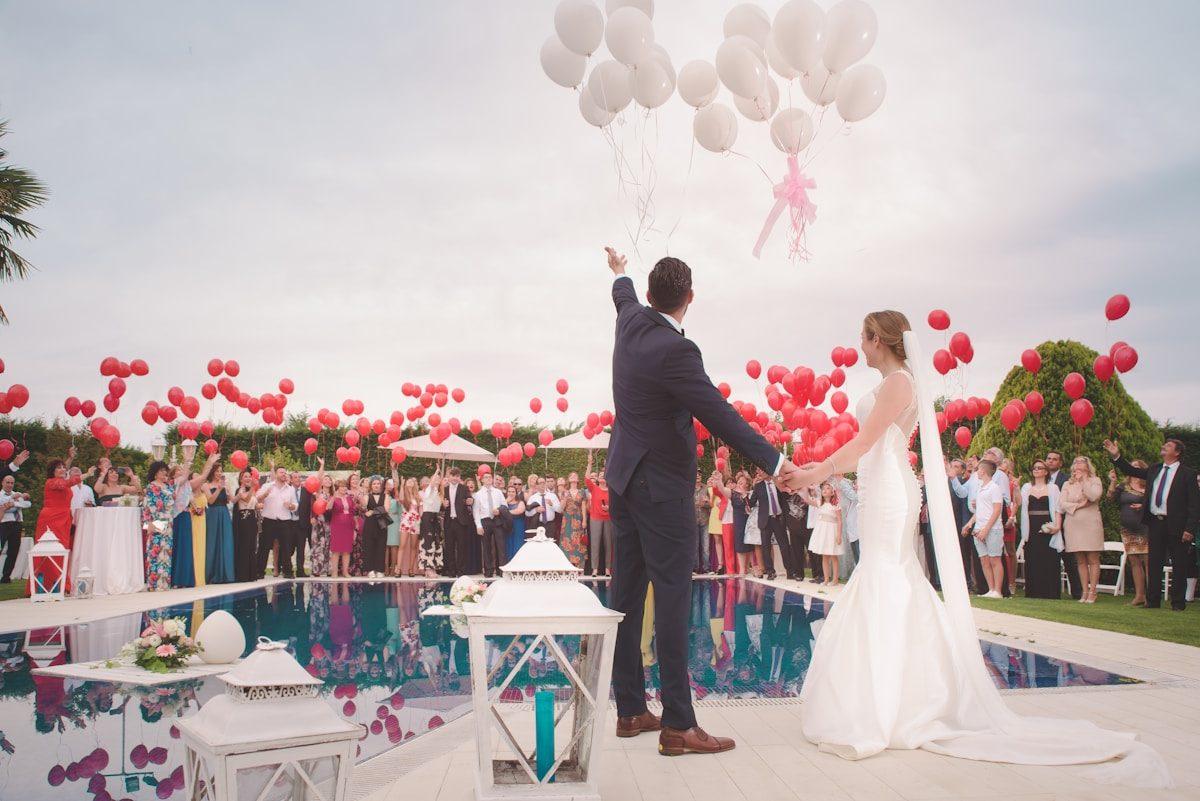
A wedding guest reads paper before they read anything on a screen. The invitation sits on a kitchen counter for a fortnight. The order of the day is in a jacket pocket by eleven o'clock. The place card tells them which table, and the menu tells them what is coming. This is the fact that makes a wedding guest photo upload QR code different from the same square at any other event: it does not have to compete for attention, because it can be printed on objects the guest was always going to hold. The trick is to put the code there without making the whole day feel like a data-collection exercise at a conference.
What a wedding changes about the ask
Three things no other event hands you: a room full of strangers to one another, a scheduled minute when everybody goes quiet, and a guest list that includes people you have never met.
The photographer you hired is on the good side of the room. They are where the light is, where the couple is, and where the parents are crying, and they are never going to be standing at table nine with a phone in their hand. Meanwhile table nine has been photographing everything since the drinks reception, because that is what a table of people who have known each other for twenty years does. Nothing bridges that gap except a way to hand the files over that costs a guest less than finishing their wine. A printed code is that way, and a wedding is where it pays for itself.
Four pieces of stationery, four different readers
- The invitation
- Read at home, weeks early, by a guest with a full phone gallery from the engagement and no reason to wait. A code here collects from the people who cannot come at all: a message, a photograph of the outfit they will wear, a clip recorded in a kitchen abroad. Anything sent early lands in the same collection as everything from the room.
- The order of the day
- Handled, folded, put down, picked up again. This is the paper a guest consults while standing in a corridor with no signal, which makes it the best place for the plain web address as well as the square. The card goes home in a pocket, and home is where half the photographs get chosen.
- The table card
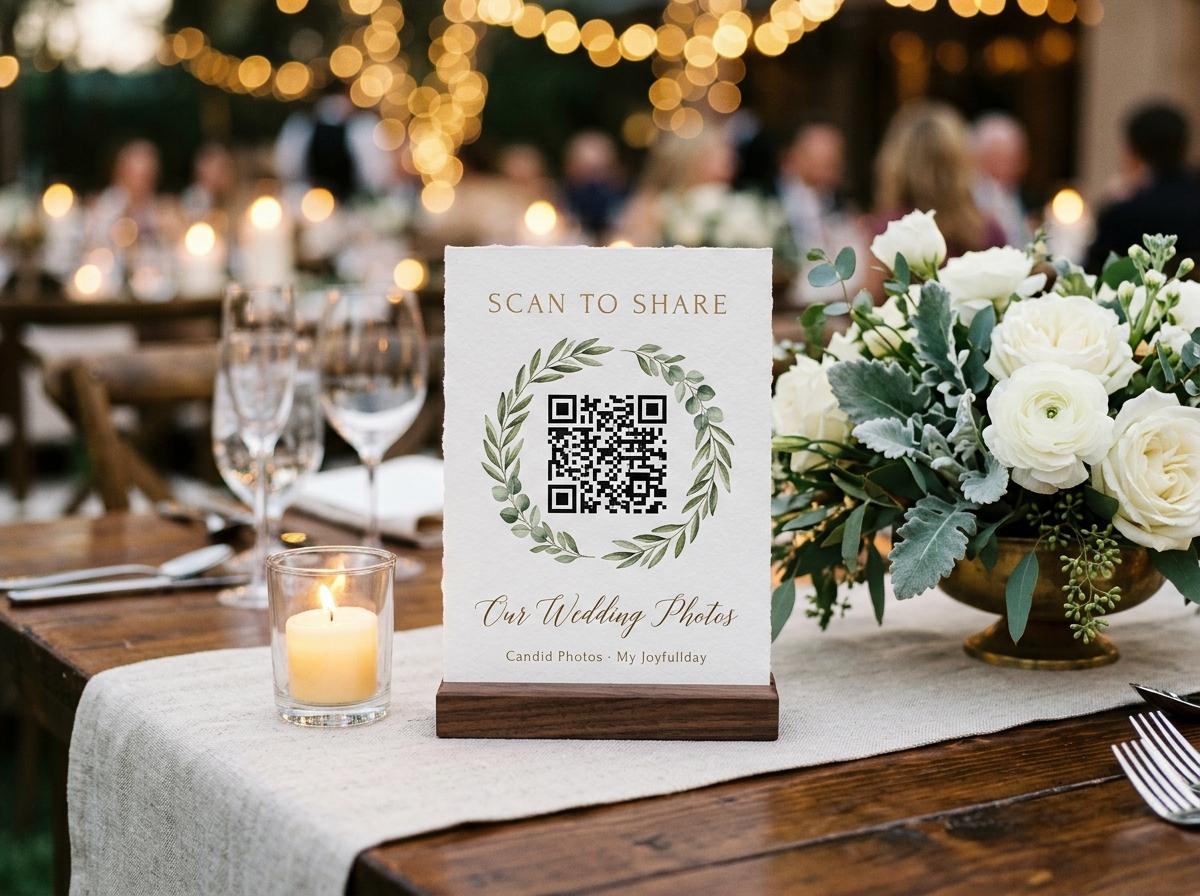
- Standing upright among the glasses for two hours, facing twelve seated people whose phones are already on the tablecloth. One per table, printed four to an A4 sheet from the dashboard on an ordinary printer, cut and folded into a small tent. This is the code that does most of the work.
- The welcome sign
- Where the latecomers, the caterer's crew and the people who never found their table all stop. It catches the guests who had no table card in front of them, which is the same group that would otherwise go home holding the best photographs of the evening.
Designing the card so the wedding still looks like a wedding
Hosts worry that a printed code cheapens the stationery, and it only does when it is the loudest thing on the page. Three decisions keep it looking like part of the day rather than an advertisement glued to it.
- Set the code in the paper's own ink and let it sit small in a corner, with a single line beside it in the typeface you already used for the menu.
- Write that line as a person would say it: 'Your pictures go here, and they are on the screen tonight.' Nobody wants to read 'upload media'.
- Give the square room to breathe. A code needs quiet space around it and a size matched to the distance it will be read from, so a table card can carry a smaller one than the board by the door.
- Put the plain address underneath, in the same small type, so the card works for the guest who will not point a camera at anything.
Print from the collection that is actually running
A code is only a picture of an address, and it keeps pointing there however old the paper has grown. The common wedding mistake is a square designed before the collection existed, or screenshotted from an old event, which opens a page a guest cannot explain. Generate the stands from the dashboard once the collection is open, and check the occasion named on the guest page before the copy goes to the printer.
How to create the codeOne address, whatever the room it is printed in
A wedding day is several events wearing one outfit: drinks in the garden, the ceremony in the chapel, dinner in the hall, the dancing after that. The temptation is to give each of them its own code, and the honest answer is that a couple who split the photographs across separate collections end up stitching them together in March and losing the names in the process. Every stand you print should point at the same collection, so the first dance and the send-off and the grandmother at the table all arrive in one place with one closing date and one download. Different paper, different moment, same address.
Announcing it without turning the toast into instructions
There is one minute when two hundred people are silent and looking in the same direction, and it is free. Use twenty seconds of it and keep the sentence concrete: the card on your table is how your photographs reach us, the ones you send go on the screen by the band tonight, and the collection stays open until the end of the week. Then stop. An apology for asking, or a longer explanation of how a QR code works, loses the room and gets remembered as the moment the couple went corporate. What carries the ask is not the speech anyway: it is the guest at the next table who has already done it and says so, which is why it helps to seed the first uploads from your own phone before the doors open.
You do not have to be the one who says it. Brief two people instead of addressing the room: whoever is running the music, and one relative with a loud voice and no shyness about using it. Ask them to mention the card on the table twice, at the point in the evening when they would normally have been reaching for their own phone. A guest takes instruction from another guest far more readily than from a host holding a microphone, and a nudge at table seven from somebody sitting there is worth more than the announcement the whole room half heard over the plates being cleared.
A fortnight before
The invitation code goes to work
Early contributors send a message or a photograph while the collection is still nearly empty, so the first guest to scan on the day finds a page that already looks alive rather than an abandoned one.
Arrival
Cards out, address said
Stands on every table facing the far side, one on the welcome sign, a spare at the top table. The plain address goes into the family group chat so the guests who flew in have it in their pockets already.
Dinner
The window when photographs actually arrive
Plates cleared, phones unattended on the tablecloth, the speeches just happened and the pictures are at the top of the recents. This is the half hour to stop worrying about the code and let the room feed the collection.
After
Chase nobody, download everything
Late contributors still have the link, so one reminder the following week reaches the people who were driving home. Then take the archive while the wedding is still the most interesting folder on your computer.
Strangers at table eleven
A wedding guest list is not a set of people who all share your taste. Plus-ones, colleagues who flew in, the supplier's crew, a cousin's friend: you have photographed some of them, and they have photographed you. This is the one occasion where it is worth thinking about what a contribution looks like before it reaches the room.
Turn it on before the guests sit down
It is a switch in the collection's settings, off by default. With it on, a submission waits until you accept it instead of appearing the second it lands.
Keep the room screen clean
Only what you have accepted plays on the display and shows in the gallery, so the wall becomes a set you chose rather than a live feed of everything the hall could point a phone at.
Look twice, quickly
Once between the main course and the speeches, once near the last dance. Most of it is fast yeses. The blur of a tablecloth and the back of someone's head go; the slightly soft photograph of your aunt laughing stays.
Let the archive be what you kept
Rejected files are left out of the download, so the collection you hand to your children in ten years is the one a person looked at. Nothing about the guest's side changes: they still send and sit back down.
The candid frames you will never get from a hired camera are sitting on the phone of a guest who assumed nobody wanted them.
When the venue has opinions about paper
A chapel that allows nothing on the pews
Most ceremony rooms restrict what can be handed out or attached. Put the code where the day is practical rather than solemn: the order of the day, the drinks table, the card beside the sign-in book. Nobody is asked to scan during a vow.
A marquee with no signal
A field with two bars of nothing turns every scan into a promise to do it later. That is survivable, because the address still works from the car park or the hotel, but print the plain address somewhere a guest can carry out of the building.
A registry office with a fifteen-minute slot
There is no time to gather a room around a card. Send the link the same afternoon instead, and let the collection fill over dinner rather than expecting a scan in the doorway.
A hotel that handles the tables
If somebody else lays the room, they decide which way the cards face. Hand over printed stands and one sentence of instruction: these go upright on each table, facing the far side. Otherwise they land in a stack by the champagne.
What the couple keeps at the end
A collection holds the photographs exactly as a guest's camera made them, with a small preview drawn on their phone so the gallery loads quickly, and it holds the name of the person who sent each one. Stills and clips sit together, so the speech filmed horizontally at the edge of a table lives beside the formal portraits. Every plan states how long the collection stays online counted from the event date, and warning mail goes out before anything comes down; when it does, the archive you took is the only copy left, which is the reason the download is the last real job of the wedding rather than a task for month eleven.
What you do with the collection afterwards is what justifies the printing. The photograph from row four becomes the frame in the hall, the clip of the toast is the thing you replay on the first anniversary, and the set of faces at the top table tells the thank-you notes who was standing where. None of it survives if it stayed on the handset of a guest who upgrades their phone in the spring.
Questions wedding hosts ask first
Do we put the QR code on the invitation or on the tables?
Both, and they collect from different people. The invitation gathers the early ones and the guests who cannot come; the table card gathers the photographs taken while people were actually sitting there. One address, printed on several pieces of paper.
Will our guests know how to scan it?
Yes, because it is the same motion as reading a menu code in a restaurant. The phone's own camera opens the page in the browser they already use, with nothing to install and no account to create.
Should we ask guests to send videos as well as photos?
Worth doing once, out loud, because clips are what people forget to send and what a couple most wants to replay later. Still images and video go in the same submission from the same picker, whenever the collection includes video.
Do we want approval turned on?
If the room contains people you have never met and a projector is pointing at the gallery, most hosts do. It is a switch on the collection, off by default, and it holds each submission until you accept it.
How many stands should we print for the tables?
One per table plus a couple for the bar, the cake table and the cloakroom. Four stands print on one A4 sheet from the dashboard on an ordinary printer, so a full room is a handful of sheets, a pair of scissors and a folding job.
What about the relatives who are not invited to the room?
Give them the same address. A message recorded in a kitchen two time zones away lands in the collection beside the photographs from the dance floor, and it comes down in the same archive.
Print the code onto paper people were going to hold anyway
Open the wedding collection, lay the stands out on one sheet, put the address on the invitation, and spend twenty seconds of the welcome speech on the photographs. Everything else about your stationery can stay exactly as elegant as it is.
QR code photo sharing
Put one link on the tables and let everyone contribute.
Create a collection, print the table stands, and the photographs your guests took are waiting for you the morning after. Guests never install anything and never make an account.