A wedding collection, from the welcome drinks to the archive
A hundred and twenty guests with phones is a second photography crew that nobody briefed. Here is the package the day usually needs, where the cards go, what to do about the speeches, and how the evening arrives on the wall while it is happening.
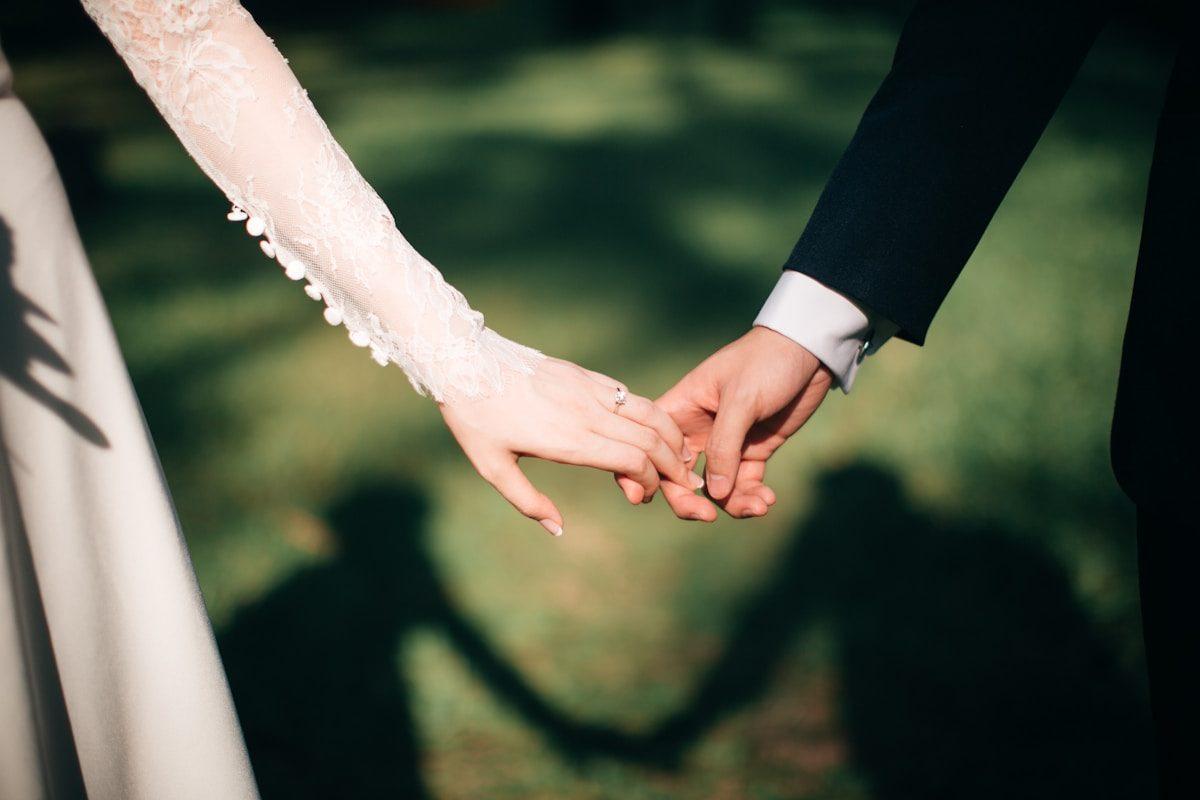
The professional photographs are the spine of a wedding, and they are taken by a person who cannot be in four rooms at once. What is missing from them is not quality — it is angle. The face your best friend made during the reading, the kitchen staff laughing at the door, the table that spent the speeches filming rather than listening. None of that is anybody's fault. It is arithmetic: one camera, one day, one couple.
A guest collection is the second half. It is not a replacement for the photographs you paid for, and the couple who frame the guest frames alongside the professional set usually find the two do almost opposite jobs.
What actually arrives
A seated room of a hundred and twenty guests tends to produce contributors in the forties or fifties, and a collection of three hundred to seven hundred photographs between them. Some guests take no photographs at all, some delete theirs before they get home, and a handful of people send twenty files each — usually the same three relatives, in every wedding, in every family.
- When it fills
- Two bursts: after the speeches, when the room has a cocktail and nothing to do, and after the first dance, when the phone comes out again. The evening's last hour contributes less than you would hope and more than a group chat would have produced.
- What dominates
- The ceremony and the speeches, then the group photographs at the tables. The dance floor photographs badly and arrives late, and is worth keeping anyway.
- Video
- A wedding's clips are the part the professional set never has: the toast from three metres, the band from the bar, the corridor outside the getting-ready room. Expect a few dozen, and expect a few of them to be large.
- The guestbook
- Written lines from the people who would never have been handed a pen at a table, and filmed wishes from the relatives who came from far away. The recorded voice message is what a grandparent who cannot stand for a photograph will do instead.
The package a wedding needs
The $39 package, almost every time, and the reason is the count rather than the features: seven hundred and fifty photographs, a hundred clips, twenty gigabytes, a year online and originals in the download. A wedding's files are the ones that go into an album and onto a wall, and a standard-resolution copy of the only photograph of your grandmother dancing is not what anybody wants in month ten.
A hundred and twenty guests is comfortably inside it. A two-hundred-guest wedding with a room that found the code early is at the edge of it, and buying a hundred more photographs for $5 before the invitations go out is a cheaper decision than discovering the ceiling between the courses.
Under-provisioning
- The free package on a real wedding, which stops at twenty photographs and ten contributors
- No cards on the tables because the stationery was already printed
- A closing date discovered in month eleven rather than a download taken in week one
- Video left switched off because somebody once sent a bad clip
Planning the evening instead
- A package with room for the contributors you will actually get, plus one extra allowance bought early
- A stand on every table, one at the bar, one at the exit, and two spare sheets in a drawer
- A room screen set up and tested the afternoon of, with a hold time long enough to look at
- The archive taken the morning after, before the honeymoon and long before the printer
Approval, on a wedding day
Most wedding rooms contain at least one person the couple has met once, and at least one child with access to somebody's phone. Turning on the option to read each photograph first is the common choice for a wedding where the wall is running, and the cost is honest: somebody has to look at the pile during the evening, or the wall shows nothing and the room assumes the collection was a bad idea.
The usual compromise is a designated reader — a witness, a sibling, whoever is least likely to be on the dance floor — with the media list open on their phone and one instruction: approve anything a person would be pleased about, reject the floors and the blurs, hide whatever you cannot decide on. Ten minutes across the whole evening, and the wall never shows the room an accident.
The day, in order
Weeks out
Create it, print it, put the link in the invitations
Set the collection up while the details are on your desk, print the stands, and put the written address beside the code in whatever the guests already received. Test one printed card with a phone that is not yours.
The afternoon of
Set the wall
Open the screen address on the machine that will run it, choose a look, preview it from across the room, and decide whether new arrivals join live. Put the presenter keys somewhere a caterer can read them.
The ceremony
Nothing to do
Cards on the tables, guests in their seats. The collection will start with the people who were photographing before you arrived, which is correct.
The speeches
The first burst
Check the pile once between courses if you are reading each file first. The wall should be showing the room what it has already been doing all afternoon.
The morning after
Download the whole thing
Before you judge a single photograph, take the archive and copy it. Say so to the guests, and send the address to the relatives who were not there.
Month three
Close it deliberately
The date the files leave is printed on the dashboard from the first day. Decide about an extension, or about the album, before the warning mail arrives rather than after.
Wedding questions
Does this get in the way of the photographer we hired?
It should not, and the courtesy is to say so out loud. Most photographers are relaxed about guests sending files to a separate collection — it is their own gallery they compete with, and the brief they signed covers a fixed number of hours in a fixed set of rooms.
What about the getting-ready room?
Put a card there. The photographs taken while four people are helping with a zip are among the ones a couple regrets missing most, and there is no professional in the room at that hour.
Can the guests abroad see it?
The gallery address reaches anybody you give it to, and there is no separate account for them to make. A relative who missed the wedding can open the link on a laptop a week later and see the whole evening in the order it arrived.
Who keeps the photographs at the end?
The host account, which is normally one of the couple or one of the parents who paid. A collection has a single owner login, so decide whose account it is created in before the invitations are out — this is the one thing about a wedding collection that is worth agreeing in advance.
What if the weather cancels the outdoor part?
Nothing to do. The collection follows the room rather than the plan, and a soaked marquee produces a great many photographs of people being brave about a soaked marquee.
Set the collection up before the stationery is printed
The guest address is chosen once and goes on the cards, so the wedding flow is: create it, print it, put it in the invitations, and let the room fill it.
Packages
One price for the collection, chosen before the invitations go out
Every package carries the guest link, the printable stands and the private gallery. Guests never pay and never register.
Something this page does not answer? Write to support@candidphotos.myjoyfullday.com.