Signing from anywhere
An online video guestbook, and the guests a room never gets
A book on a table holds whoever walked past it. A link holds everybody else, including the cousin three countries away and the friend who is only ever free after midnight.
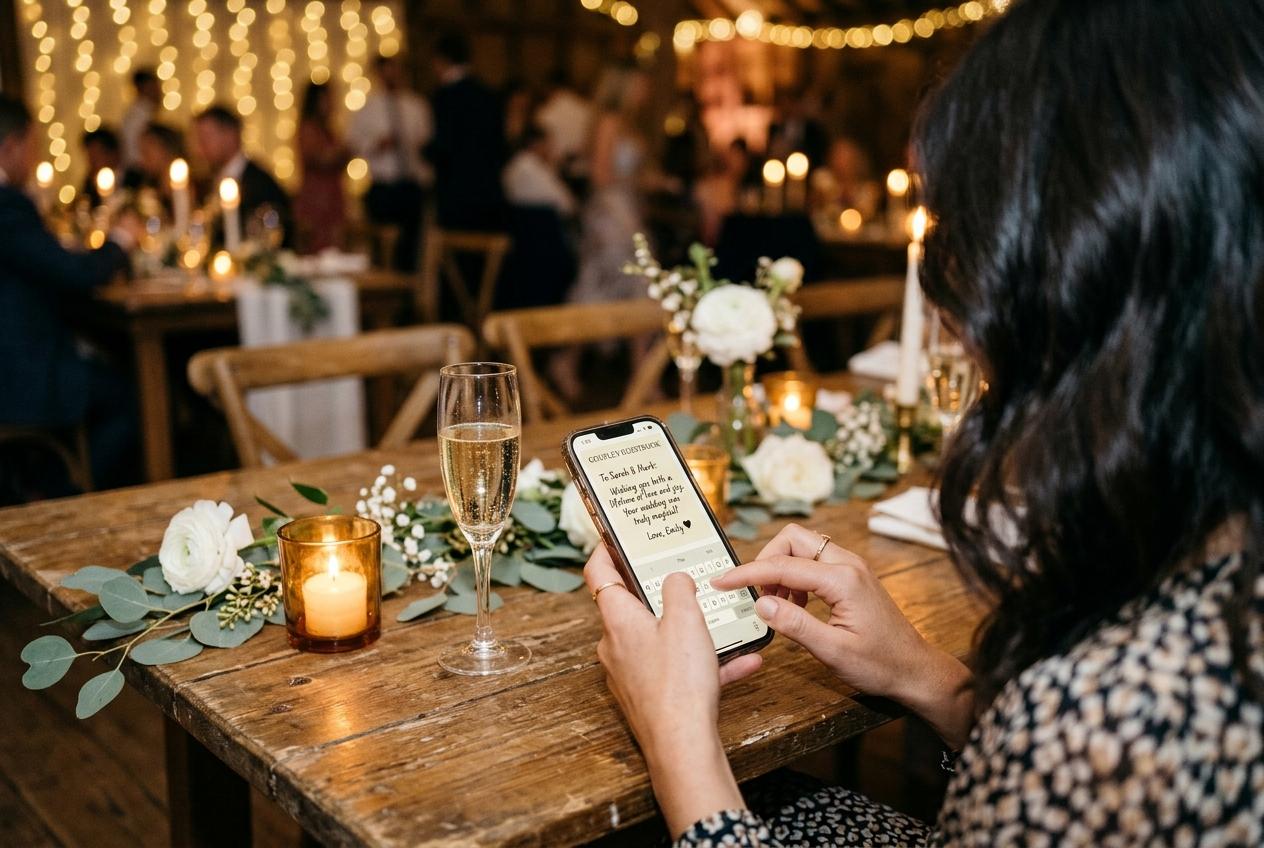
An online video guestbook is the part of an occasion that never needed a room. The book at the back of the hall collects the neighbours, the cousins who flew in and whoever happened to be standing near the cake between the starter and the speeches. It does not collect the rest, and the rest are frequently the people with the most to say: the aunt who could not travel, the colleague on a night shift, the friend who is genuinely sorry and genuinely awake only after midnight. Put the invitation at an address rather than on a table and all three of them sign. Mira records in her kitchen in Tallinn at half past seven, with the washing-up still in the sink. Ella films eleven minutes between flights, holding the phone at arm's length. Jonas sends his at two in the morning, because that is the first quiet hour he gets, and it lands in the same book as everybody else's.
What an address does that a table cannot
Presence stops being a requirement
All a guest needs is the link and sixty seconds. Somebody who was invited but could not come can still take part, which is worth a great deal at a family occasion where half the family could not come.
Nobody has to be quick
A table guestbook runs in the gaps between courses, in a queue, with somebody waiting behind you. An address runs for as long as the collection is online, so a guest can record, delete it, and send the take they are happy with.
The shy guest gets a private attempt
Plenty of people will speak warmly to a phone in an empty kitchen and say nothing at all to a camera with an audience. That second group is not smaller than the first; it is simply invisible on paper.
Handwriting stops being part of the deal
Some guests write beautifully. Some cannot form letters with a pen anymore, and some never learned in the language the book is in. Speaking removes that, and typing is still available on the same page.
Late does not mean lost
A paper book closes when the last guest leaves. An online page keeps taking entries through the following week, which is when the returning travellers, the shift workers and the friends who promised something all arrive. That tail is usually where the best material is.
What happens when a guest opens the link
Their browser opens a page, not a store
Nothing to install, no account to create, no password to remember, and no price anywhere on the screen. The guest reads your welcome line, gives a name, and is ready. That is why a link sent to sixty people produces messages and a request to join an app produces apologies.
They choose the camera or a file
The page opens the camera and takes the recording there, or accepts a video file they filmed earlier and picked from their own gallery. Mention the second route in the invitation, because a clip filmed by a steady hand looks and sounds far better.
They say who they are, once
One name field, and the page remembers who is typing for twelve hours. A guest who sends a message before dinner and a second one after the party is not asked to introduce themselves again.
It arrives with a name and a time on it
Every entry carries who left it and when, so the book is navigable rather than a pile. Two years later you go to your uncle rather than scrolling through forty clips hoping to find the one about the boathouse.
You decide what shows, if you want to
Approval is a switch the host turns on, and it is off until you turn it on. With it switched on, a message waits for you before anyone else sees it, and anything you refuse stays out of the collection and out of the download. A lot of people leave it off and enjoy the surprise. A host handing a link to a hundred and fifty guests often does not.
They can come back to it
Nothing is overwritten. The same address takes a second entry, a third, and a set of photographs the next day, all under the name already remembered.
The kinds of thing that reach the book
- A message recorded on the page
- Made for you, in the moment, into the browser camera. Filmed entries are on Celebrate and Keepsake, and they are a nine dollar one-off add-on to Gather. This is the kind that catches the hesitation, the laugh that arrives late, and the wave at the end.
- A video file sent in from a phone
- Somebody films their grandfather in the garden on Sunday, then uploads that file from their own handset. The entry carries his name, the picture is steady, and the person who did the filming never appears.
- A written entry
- Two lines typed on the same page, from Gather upward, whether or not the filmed version is switched on. The neighbour who will not be filmed and the cousin who writes beautifully end up in one book rather than two places nobody opens.
- Photographs sent alongside
- A contributor can put pictures and clips in a single submission, so the photograph of the toast and the film of it arrive together under the same name.
- Whole families in one frame
- Two people leaning into the shot together, three children rehearsed and then forgetting every line: a page reached from a kitchen table lets a household record as a group, which a card table rarely does.
When to send the link so that people record
Two weeks out
The people who are going to miss it
Send the address to absent guests with two dates attached: the occasion and the day the page comes down. A guest told only that a link exists will mean to record it and will not; a guest told which fortnight they are working to will send something, usually early.
On the day
The room, out loud, once
Say it during the welcome and put a printed stand on the tables, so the address is reachable without anybody scrolling for the message. Most entries from a room happen between the food and the dancing.
The next morning
Ask for the gap by name
By then you know what is missing, so one message can ask for exactly that: nobody filmed the speeches, nobody filmed the garden. A specific request retrieves a specific file.
The closing week
One last call to the slow ones
There is always a small group who meant to and did not. A reminder with the closing date in it usually brings two or three entries in, and they are frequently the best of the set.
Time zones, night shifts and the two-in-the-morning clip
The awkward hours are the productive ones. A link that stays open sends a message at eight in the morning in one country and at midnight in another, and both arrive in the same book. This is where an online video guestbook earns its place, because the people with the least time are usually the people you most wanted to hear from.
- A sister on the other side of a work shift, filming from the passenger seat of a parked car because the flat is not quiet until she is home.
- A grandfather who cannot get downstairs, whose grandson holds the phone for him and uploads it the next day with the old man's name on the entry.
- A colleague on assignment, in a hotel room at eleven at night local time, who apologises for the lamp behind him and says the kindest thing in the collection.
- A cousin who meant to write a line, changed her mind, and recorded the story she has never told out loud at any occasion.
What the book looks like the morning after
None of it needed your supervision while it was happening. You open the collection with coffee, and there are entries in it from people you had already made a joke about not coming, each one labelled with a name and an hour. Two advantages show up immediately. A message can be played for whoever is sitting at the same table, which paper cannot do, and the ones you want at the front can be featured so that a grandparent's blessing is the first thing the family sees rather than the ninth.
What it costs, and which plans take a filmed message
- Preview, free
- Twenty photographs, ten contributing guests, 500 MB, seven days online. No clips at all, no guestbook of either kind and no downloads, so it is a rehearsal of the link and the settings rather than of the messages.
- Gather, $19
- Two hundred photographs and thirty clips in 5 GB, unlimited contributors, six months online, a written guestbook and standard downloads. On this plan the filmed guestbook is bought as a nine dollar one-off.
- Celebrate, $39
- Seven hundred and fifty photographs and a hundred clips in 20 GB, written and filmed guestbook included, live slideshow included, original-quality downloads, twelve months online. Chosen when the messages themselves are the point.
- Keepsake, $69
- Two thousand photographs and three hundred clips in 50 GB, two years online, premium gallery themes and two additional people who can help manage the collection.
- Room to grow
- Fifty extra clips cost nine dollars and a hundred cost fifteen. Six further months of retention cost nine and twelve months cost fifteen, and the extension begins when the included period ends rather than on the day you buy it.
- What the guest pays
- Nothing, ever. Everything is charged once per event in US dollars, to you. Nobody at the other end of the link sees a price or is asked for anything, and the only ceiling they can meet is the video allowance on the plan you chose.
A table guestbook records the people who were in the room. An address records the people who were thinking about you.
Keeping a link that is shared widely still private
- Send the address to people rather than posting it somewhere public. It is not listed anywhere, and guest pages are kept out of search indexes.
- Switch the public gallery off if you would rather contributors could not browse what everybody else sent.
- Turn approval on if you want to read each message before the family does, and leave it off if you would rather be surprised. It is your switch, and it is off until you touch it.
- Feature the entries you want at the top of the page so that the first thing a grandparent sees is the one you chose.
- Check the video allowance against the size of the circle you are inviting, and decide what you will do if the clips overrun it.
- Write one line into the invitation saying when the page closes, because that date is doing the work rather than the date of the occasion.
Nothing a guest sends is published to the open web. Whoever holds the address is the whole audience, which is why an online book can be more private than one sitting on a hallway table.
Questions hosts ask before sending an address
Do my guests need an app to leave a filmed message?
No. The link opens a browser page on the handset they already carry, and the camera is used from inside that page. No install, no registration, and no cost shown to them.
Can somebody sign if they were nowhere near the occasion?
Yes, and that is the whole purpose. A message recorded in another country lands in the same book as one recorded at the table, with the same name field and the same date.
Is a filmed message included with every collection?
No, and this is the detail people miss. Written entries come with Gather and every plan above it. Recorded video entries come with Celebrate and Keepsake, or as a nine dollar one-off on Gather. The free plan carries neither, so it cannot test this at all.
Can I read a message before anybody else sees it?
Yes. Approval is a control the host switches on, and it holds every submission until you accept it. Anything you turn down is left out of the collection and out of the archive you download afterwards.
How long does the book stay open?
For the online period of the plan you choose: six months on Gather, twelve on Celebrate, twenty-four on Keepsake, with add-ons that extend by six or twelve more.
My aunt cannot work a camera. Is she excluded?
No. Somebody else can hold the phone, film her in her own garden, and upload that file with her name given as the sender. It beats watching a guest fight a preview screen at a table.
Say when the page closes, not only when the occasion is
An absent guest has no date in their head for a link they were sent by text. Two dates in the message, the occasion and the closing date, is the difference between a promise to record something and a message that actually arrives. The entries that land in the final days are usually the best ones in the book, and they only arrive because somebody was told there was still time.
Compare the plans and their online periodsSend the address to the people who could not come
Open one collection, put the link in the invitation as well as on the tables, and let the book fill from kitchens you will never stand in. Setup takes a couple of minutes and the guests do nothing but open a page.
Video and guestbook messages
Put one link on the tables and let everyone contribute.
Create a collection, print the table stands, and the photographs your guests took are waiting for you the morning after. Guests never install anything and never make an account.