The no-cost collection
A free event photo sharing QR code, and exactly what it holds
A free event photo sharing QR code is a real collection with a real address and a printed stand, open to twenty photographs from ten guests for seven days. Here is the whole honest specification, what it is genuinely good for, and the moment a host should stop pretending it is enough.

Most pages about a free tier are written as though free were a feature rather than a set of dimensions. It is not generous or stingy; it is a shape. This one is easy to describe, because the shape has numbers in it, and the useful question is not whether the price is zero but whether the collection can hold your particular room. So: what is on it, what is not, which events fit inside it, and the four limits a host runs into in a predictable order. Nobody is going to be told they misunderstood the offer after the plates were cleared.
Two things the word free does not mean here
Guests never pay anything, on any collection, ever. And a collection with no price on it still has to come down on a date.
The first confusion is about who the money would come from. It never does, at no level of this product: the person scanning a card at your table is not asked to pay, register, or watch anything, and they never see a price or a prompt. Whatever a collection costs, the cost belongs to the host, and the upload page behaves identically for a hundred-dollar occasion and a zero-dollar one. A free tier is a smaller collection, not a worse experience for your guests.
The second is about permanence. Nothing here outlives its closing date, and that includes the free collection: it stays online for seven days counted from the event date, and then it comes down. Warning mail goes out before anything is removed. That is honest design rather than a trick, because a photograph shelf that never closes is a shelf somebody has to pay to heat, and a date is what makes a host actually take the download.
The specification, written out in full
- Twenty photographs
- That is the whole capacity of the collection, and it is twenty files rather than twenty guests. A table of people who enjoyed themselves will fill it before the main course is finished, and once it is full the next guest finds the upload closed.
- Ten contributing guests
- Ten different people can send anything at all. This is the limit that catches hosts first, because it counts contributors rather than files: the eleventh person to pick up their phone is the one who gets nothing.
- Seven days online
- Counted from the event date, not from the day you created the collection. Late uploads still arrive inside the week; after it, the page comes down and the photographs with it.
- Five hundred megabytes of storage
- Plenty for twenty modern phone photographs, which is what makes the file ceiling the tighter of the two numbers. It is a small room, deliberately, for a small test.
- No video
- The free collection takes still images only. The clip of the speech, the toast, the first dance filmed horizontally at the edge of a table: those need a plan that includes video, and no amount of choosing carefully will make a clip fit here.
- No downloads
- There is no archive to take away and no individual files to save, which is the limitation that matters most. A free collection is for looking at during its week, not for keeping, so treat it as a rehearsal of the experience rather than the place a wedding ends up living.
- No guestbook, no video messages, slideshow only as a one-off
- Written messages and recorded video messages are above this level. A room display can be bought here as a one-off for the event, but the wall can only play what the collection holds, and that is twenty photographs. The gallery wears the plain appearance rather than the themed ones. The upload itself is unchanged; what is missing is most of everything around it.
What a no-cost collection still gives you
The parts that decide whether an evening's photographs actually arrive are not the parts that cost money, and none of them are switched off on the free tier.
- A short web address for the occasion and a matching QR code, printable as four table stands on one A4 sheet from an ordinary printer.
- The guest experience in full: no app, no account, no password, one name field that the page remembers for twelve hours, and never a price on the screen.
- Photographs stored as the guest's camera made them, with a small preview drawn on their phone so the grid loads quickly.
- A name against every file, so you know whose phone the photograph of the cake came from.
- An unlisted address, with guest pages kept out of search indexes, so the collection does not surface for somebody typing your names.
- A switch that holds each submission until you accept it, which you can turn on before printing a card for a room of strangers.
- The same picker a paid collection uses, so nothing your guests learn on this one has to be relearned later.
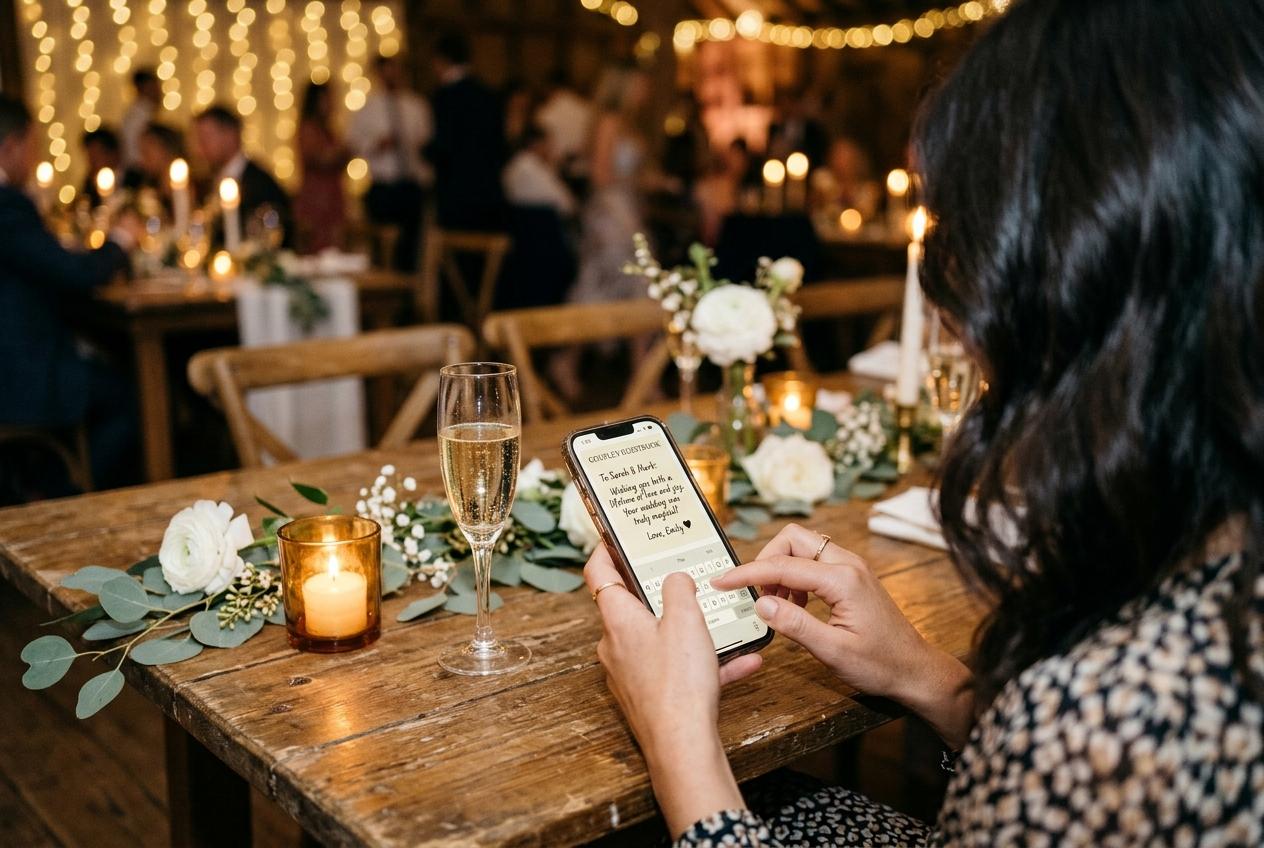
Four events that genuinely fit inside it
A birthday tea for ten
Twenty photographs from ten aunts is roughly the yield of that afternoon, and seven days is long enough for everyone to look at them once. Written messages and a printed archive would be nicer; nobody is going to complain about the shape of the thing.
A rehearsal dinner or an engagement party
Small room, everyone knows everyone, one evening. It is the closest thing to a wedding run-through that exists, and a couple who have never used the upload page before learns its quirks while the stakes are low.
A test before a big booking
Mira and Jonas ran theirs on a Sunday lunch with eight people, printed the stands on the kitchen printer, and discovered that the card folded the wrong way faced the wall. That is the whole argument for the tier: a cheap evening teaches you the two mistakes you would have made in front of two hundred people.
A one-day school or community day
A harvest festival, a sports social, an office away-afternoon where the point is a wall of photographs by four o'clock rather than an archive in March. Fifteen people sending one picture each fits, and nobody needs to be given a login.
The order the limits arrive in
The eleventh guest
First, and always the contributor ceiling. Two families contribute forty photographs between them and the other nine people at the table never get asked. You will notice this one by dinner, because the people who were going to send most are the ones the count locks out.
The twentieth file
Second, and it goes quietly. The picker still opens, the guest still chooses, and the send does not complete. Any occasion with a dance floor blows past twenty before the speeches.
The clip somebody filmed
Third, and this is the one nobody expects. There is no video on the free collection, so the toast that would have made you cry in a year's time stays on a phone that gets replaced in eighteen months.
Day eight
Last, and the most expensive. The collection comes down and there was no archive to take, because downloads are not part of this tier. Everything you wanted to keep had to be saved by hand inside the week, which is not the same thing.
Seven days with no way to download is a short window, not a library
If a collection matters enough to print cards for it, it matters enough to plan where the files will live afterwards. The paid tiers add downloads, capacity, contributors and time; the add-on list adds more of the same when an evening runs to the edge of what you chose.
See the plans and the add-onsA free tier should be judged by what it teaches you about your own event, not by what it lets you keep.
What changes the moment you pay
- Gather · nineteen dollars
- Two hundred photographs and thirty clips from as many contributors as turn up, five gigabytes, six months online, a written guestbook, standard downloads and the room display and video guestbook available as add-ons. Built for birthdays, graduations, baby showers and small weddings.
- Celebrate · thirty-nine dollars
- Seven hundred and fifty photographs and one hundred clips, twenty gigabytes, twelve months, the written and video guestbook and the live slideshow included, original-quality downloads and the advanced appearance. The one most couples choose.
- Keepsake · sixty-nine dollars
- Two thousand photographs and three hundred clips, fifty gigabytes, two years online, premium gallery themes and two extra people to help look after the collection. For an occasion you intend to hand to somebody else one day.
Using the free week as a rehearsal
The best use of a free collection is to spend its seven days learning the shape of your own event. Print the stands and see which way they fold, and whether a guest can read the small print from a seated position. Write the welcome line and watch whether strangers respond to it. Put your phone down at a table of ten and count how many people look up at the screen behind the band, which tells you whether a room display is worth anything at your venue. Time how long the twentieth photograph takes to arrive, because that number tells you which tier the real event needs. All of that is worth more than twenty files, and none of it is possible by reading a specification.
Three habits that waste a free collection
Twenty photographs is a small budget, and it is easy to spend it on the wrong things before the event that needed the tier has even started. These are the three ways a free week goes missing.
- Filling the collection with your own test uploads on the Monday, so the room has nine files left to share by the time the food arrives. Delete anything you used for checking the page.
- Printing a stand for a table you have not confirmed exists, then discovering the caterer moved six people into the corridor with no card in front of them and no way to send anything.
- Treating the week as an archive. There is no download here, so anything you actually want in five years has to move to a plan that can hold it before day eight.
- Waiting until the last minute to find out whether the venue has signal. A free run at the same building, on a quiet evening, tells you whether the card or the plain address is doing the work.
None of these cost money. They cost the only twenty files you get, which is why a rehearsal is worth spending on a small evening rather than on the occasion that mattered.
Questions people ask before they start on free
Is the QR code itself free to print?
Yes. Every collection gets a short address and a matching code, and the dashboard lays four table stands on one A4 sheet for an ordinary home or office printer. There is no card stock to order and no print shop involved.
Do my guests have to pay or sign up?
Never, and not on any tier either. A guest points the camera, chooses files, types their name once and sends. No app, no account, no password and no price appear anywhere on the guest page.
Can I add more photographs without changing plans?
Capacity and time are bought as one-off add-ons when an event runs to the edge of what was chosen: extra uploads of a hundred or two hundred and fifty photographs, more clips, and longer retention that starts when the included period ends.
Why is there no download on the free collection?
Because the free tier is sized as a trial of the experience rather than a place to keep an occasion: twenty files for a week. Every paid plan includes downloads, with original-quality files on the two upper plans.
Can ten contributors each send several photographs?
Yes, and the twenty-file ceiling is shared between them, which is why a busy table uses the collection up so quickly. The contributor count is the tighter of the two numbers on almost every event.
Does the free tier look different to a guest?
Only in the plain appearance of the gallery. The address, the code, the picker, the name field and the confirmation are the same ones used all the way up, which is what makes a free week useful as practice.
What happens to a photograph that is still there on day eight?
The collection comes down on the date its plan states, and warning mail goes out beforehand. On a free collection there is no archive to rescue it from, so anything worth keeping should be saved inside the week.
The honest verdict on a zero-price collection
A free collection is a real event with a real printed card and a hard ceiling that most occasions meet before dessert. It is the right choice for a small room, a test run, or a one-off afternoon where looking is enough. It is the wrong choice for a wedding, an anniversary everybody travelled for, or any evening where somebody filmed a clip you will want to hear again. The useful thing to do is to spend a Sunday lunch finding out which of those your event is, rather than discovering it in the last hour of the only party you get.
Run the free week and find your real ceiling
Open a collection at no cost, print four stands on your own printer, and invite eight people to fill twenty photographs. You will learn which limit your actual event runs into before it matters.
QR code photo sharing
Put one link on the tables and let everyone contribute.
Create a collection, print the table stands, and the photographs your guests took are waiting for you the morning after. Guests never install anything and never make an account.