Photo collection by event type
Collect Photos at Events Before the Room Breaks Up
To collect photos at events you need the pictures that are on other people's phones, and you need them while those people are still standing in the same building. This is the workflow that does it across a room, without a group chat.
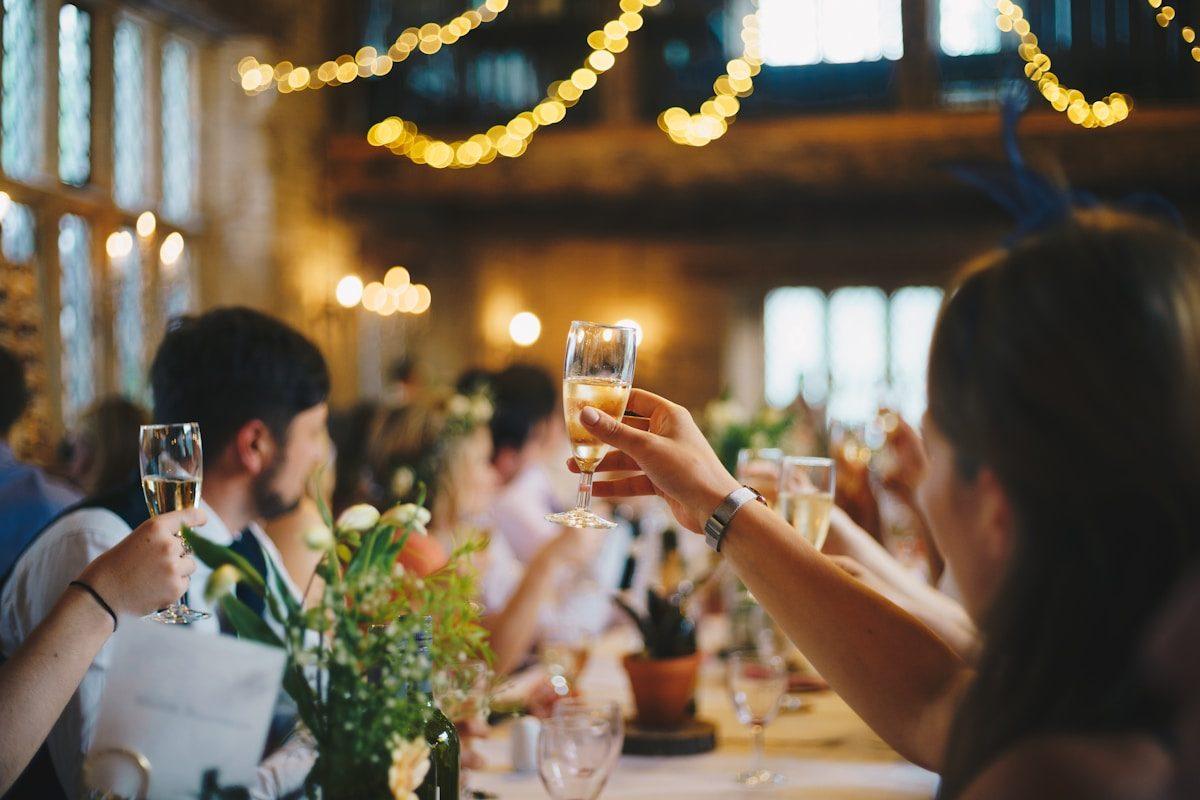
Somewhere between the first drink and the last dance, a strange thing happens to the photographs of your own event: almost all of them stop belonging to you. The person across the table has four good frames of the cake. The teenager by the speakers has a clip of the speech nobody else could see. Two relatives took the same group photo from two different angles and both of them think the other one will keep it.
Collecting photos at events is the job of getting all of those pictures into one place that you own, before the room empties and everyone's camera roll becomes a private archive you will never see. It is not a technical problem, whatever the forums tell you. It is a timing problem and a manners problem, and both are solvable if you set it up while there are still people to set it up for.
Who is holding your photographs
Count the cameras in the room rather than the guests, and the job gets much smaller.
The person you hired
They will deliver. Their frames are the ones you planned for, and they are usually the slowest to arrive because there is editing in the way. Nothing here replaces them; this is about everybody else.
The table that never stopped shooting
Every event has one. Cake, toast, dance floor, the same shot eleven times. This group sends happily if you make it one tap, and never sends if you make it a task.
The person at the back with a good eye
Unlikely to know they took something worth keeping, and unlikely to volunteer files to a stranger's cloud account. They are the reason a link on the wall beats a request in a speech.
The shy relative
Has forty photographs and will not post them anywhere. Give them a page that takes a first name and a picker, and they will send more than the loud table, because nobody is watching.
The one who left early
Their photographs are the arrival and the speeches, which is exactly the part the night people missed. This is the argument for putting the address out before the event, not during it.
A room job, not a camera-roll job
The instinct is to collect the pictures yourself afterwards: message each person, receive thirty attachments across three apps, rename files, lose two of them in a chat that has scrolled away. That approach is a one-person job stretched over a week, and it is why half the photographs from a good event never surface. Nobody is lazy. The request just arrived at the wrong moment and asked for too many decisions.
The working version turns it into a room-wide job that each guest finishes in about ninety seconds, seated, with the phone they were already holding. The difference is that the collection exists before the ask, so the ask can be a printed code on a table instead of a favor you have to remember to chase. One place receives everything, everything arrives attached to a name, and the counting happens for you.
The workflow, from an empty collection to a full one
Open the collection
The occasion, the hosts' names, the date. A collection can exist while the event is still being planned, which matters because the address is far more useful printed on an invitation than announced over a microphone.
Take the address and the code
Every collection gets a short web address and a matching QR code. Four table stands print on one A4 sheet from an ordinary printer, so the physical part of this takes a minute and no budget.
Decide who can look, and who can only send
Two switches set the shape of the thing. One lets the guest page show the gallery as it fills; the other turns it off so the page becomes upload-only. A third holds each submission until you accept it, and it is off unless you turn it on.
Let the room do it
A guest points a camera at the code, a browser page opens, they pick the frames and clips they took, type a first name once, and send. Photos and video can go in the same submission. The page remembers who was typing for twelve hours, so nobody retypes.
Watch it fill
From a phone or a laptop, in the same room or from the car park. You will learn more about who actually photographed your event from an empty grid than from any speech you give.
Take the whole thing down
When the event is over, the collection comes down as one streamed archive, or as individual files if you only want a handful. Nothing about this step is automatic, which is why the closing date of your collection deserves a reminder in your own calendar.
Read that list for what is missing. Nobody installed software. Nobody created a login or invented a password at dinner. Nobody was asked to do it later, when the photographs were buried under two weeks of other pictures.
In the moment, or never
Asked for afterwards
- The guest has to find the photo among everything shot since
- Sending means choosing files, choosing a recipient, attaching, hoping
- Only the three people who were always going to do it, do it
- Two weeks late, the group chat that was supposed to hold them has scrolled away
Asked for while seated
- The photo is the thing they are still looking at on their own screen
- Sending means a picker, a first name, one button
- The quiet table and the back row contribute as easily as the loud one
- The gallery fills during the evening, which is what makes other people send
A collection that fills visibly is its own promotion. People photograph more freely, and send more, when they can see their contribution arrive.
When each part of this should happen
Two weeks out
Open it and print the stands
Put the address in the invitation or the joiners' email. Anyone who forwards that invitation forwards a working way to send photographs, and people who are travelling sometimes send pre-arrival pictures of the journey.
The morning
Set the switches, then stop
Choose whether browsing is on and whether you want to accept submissions one by one. Check the code scans from a phone across the room. Print the sheet and put it in the same bag as the name cards.
During
Say it once, then let the tables do it
One mention, while people are still seated, is enough. A printed code on six tables works better than a speech repeated four times, because a guest who is mid-photograph will scan a code they can see and ignore an address they half heard.
The week after
Download, then decide what happens next
Take the archive while the collection is still online and store it where you actually keep family files. After the stated period ends the collection comes down, with warning mail beforehand, and the download you took is the only copy you have.
What one collection holds
- Photographs
- The file your guest chose, stored as it arrived on their phone. The grid shows a thumbnail drawn in the browser, which keeps the page quick; the original is what you download.
- Video clips
- Sent from the same picker as the stills, in one submission. The clip stays the size the camera made it rather than the crushed version a messaging app would hand you.
- A name on each submission
- Guests give a first name so you know whose camera a frame came from, which is the only way to answer the question everybody asks afterwards.
- Written messages
- On Gather and above, the same page can take a written note alongside the photographs, so the wishes arrive in the collection rather than in a card box.
- The download
- One streamed archive of the whole collection, or single files. Anything you rejected while deciding is left out of the archive.
Showing the room what has arrived
A collection that stays on your laptop is a private spreadsheet. Put it on the wall instead. Slideshow runs at its own address, opened by a code rather than found by anyone who guesses a link, and it plays the collection on the room's screen or projector. Twelve looks ship with it, from a slow cinematic run to a bright mosaic wall.
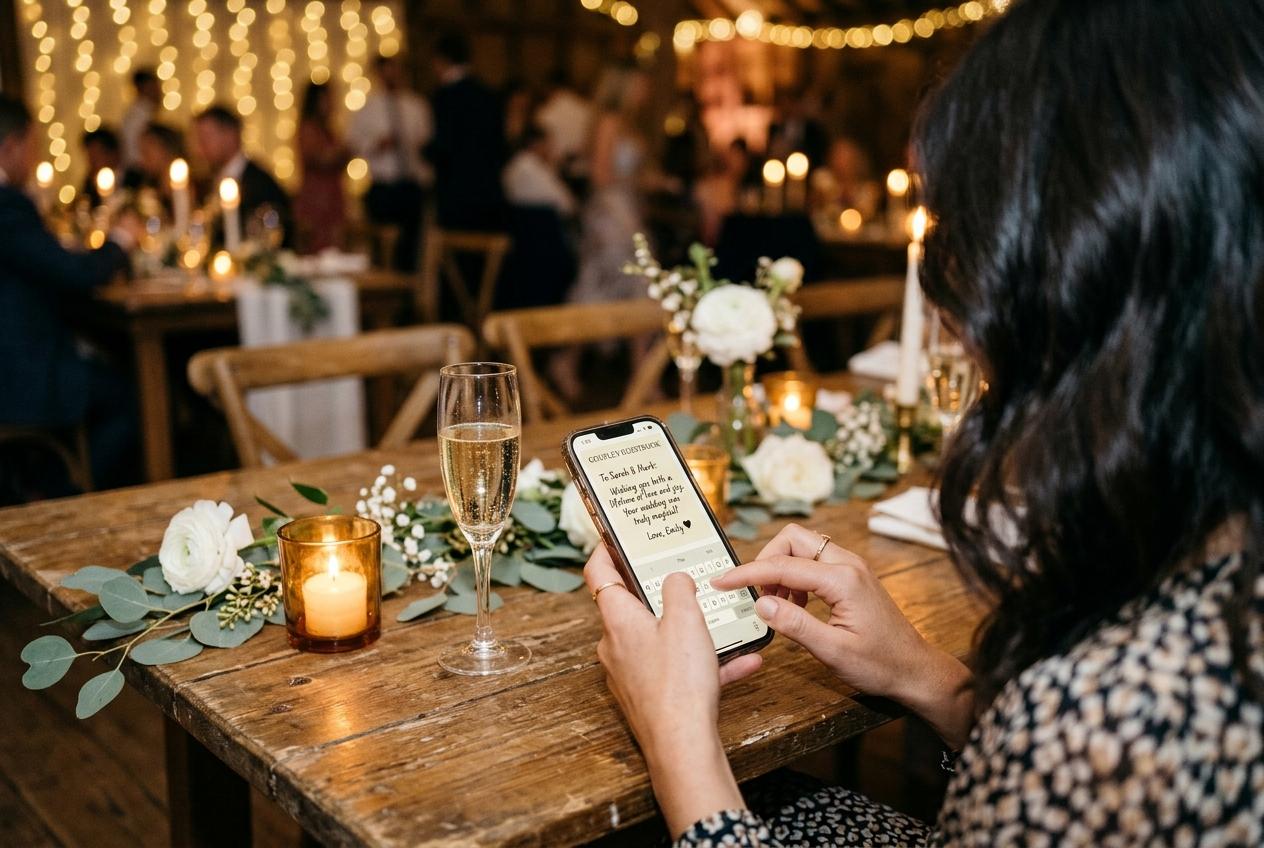
The two jobs reinforce each other in a way that surprises most hosts. A screen playing other people's photographs tells the room that pictures are wanted, and that photographs land somewhere real. Guests who would never scan a code on a wall will scan one printed on a stand beside the screen they are watching, because by then they already know what happens next.
What you do with everybody's frames afterwards
The reason hosts push hard on the collection is not that they want more photographs. It is that the useful ones are distributed. Nobody in the room has a complete picture of the day, including you, and a collection that holds table six alongside the ceremony is the first record of your own event that does not depend on where one person happened to be standing.
- The parts you missed. You were greeting people at the door, or you were the one being greeted. Somebody two tables back photographed the whole thing on a phone they would never have thought to show you.
- The faces rather than the schedule. Hired cameras follow the plan. Guest cameras follow the people, which is where the laughter and the unscripted toast live.
- A record for the person who could not come. A relative watching by video call, or a friend who sent a gift and stayed home, gets the day from a hundred angles rather than from your three best frames.
- Files you can actually hand on. One archive of every photograph and clip is something you can copy for a parent or a colleague, while the collection itself keeps each frame credited to the person who sent it. A stack of chat attachments is not.
The questions hosts ask before setting this up
Do my guests need an app to send photographs?
No. The code opens a browser page, which is already on every phone in the room. There is nothing to install, no account to create and no password to invent, and that holds at every plan.
How do I know who sent what?
Each submission carries the first name the guest typed, and the page remembers it for twelve hours so they do not retype it. That name is what you use when you want the good frame from table nine.
What if somebody sends a photograph I do not want kept?
Turn the accept-each-one-first switch on and nothing shows until you say yes. It is off by default, because most hosts would rather watch a collection fill than spend the evening approving it.
Can strangers see the pictures?
No. The address is not listed anywhere and guest pages stay out of search indexes. If you want to be certain, switch browsing off and the guest page becomes upload-only, visible to the person who is typing.
Is this only for weddings?
Weddings are the common case, but the occasion list at creation also covers birthdays, graduations, baby showers, anniversaries, corporate days, conferences and family reunions, plus a free-text option for anything else. The workflow is identical; only the printed sheet changes.
What if nobody in the room sends anything?
That is almost always a placement problem rather than a reluctance problem. A code that sits where people are seated and a single spoken mention while they are still listening usually changes the whole collection, and the address in the joining email reaches the people who left early.
The short list to check before people arrive
- Open the collection and confirm the short address reads correctly out loud
- Scan the QR code yourself from the far side of the room, on a phone that is not yours
- Decide whether guests can browse the gallery or only send into it
- Print the table stands and put them where people sit, not where staff stand
- Choose one person, besides you, who will mention it once during the evening
- Set a reminder to download the archive before the collection's stated closing date
Two of these fail quietly: a code that is too small to scan, and an address nobody can read off a wall. Test both with someone who was not involved in setting it up.
The address is the only lock
A guest page is not advertised and is kept out of search indexes, so the collection is private in practice rather than by a login screen. Treat the link the way you would treat a house key: forward it to people you invited, and not into a public group.
How photographs and personal details are handledOpen the collection before you need it
A collection costs nothing to have running while you plan, and the address is worth far more printed on an invitation than announced over a microphone at nine o'clock.
Photo collection by event type
Put one link on the tables and let everyone contribute.
Create a collection, print the table stands, and the photographs your guests took are waiting for you the morning after. Guests never install anything and never make an account.