Two different ways to invite a photograph
Wedding hashtag vs QR code: choose where guests should send photos
A wedding hashtag helps people label social posts; a QR code opens an event upload page. Compare audience, privacy, file collection and how you will download the photos before choosing one or using both.
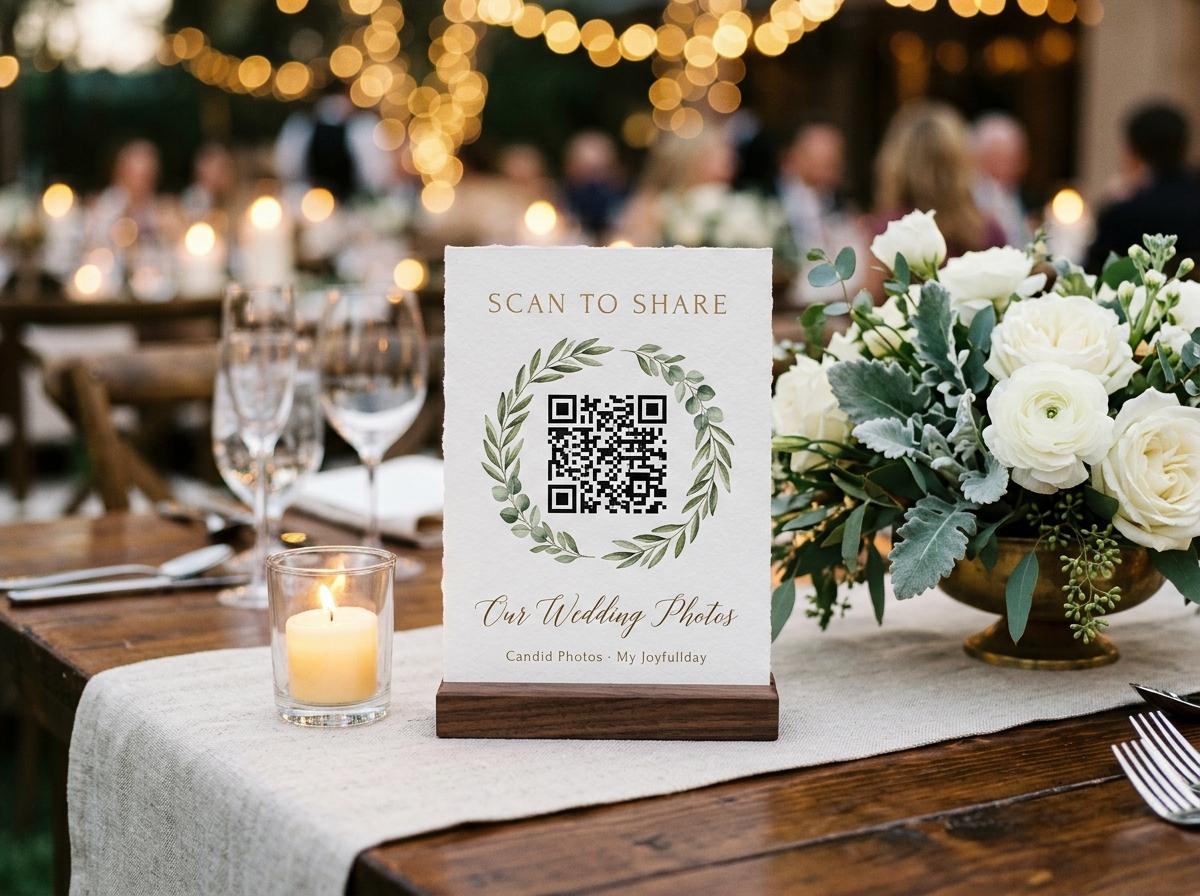
A wedding hashtag and a photo QR code both give guests a way to respond to a request, but they lead to different places. A hashtag labels posts that people publish through a social platform. A QR code can open an event page where guests send files to a collection. The first question is not which symbol looks better on a sign; it is whether the couple wants public or platform-based posts, a private event collection, or both. Think about who will participate, where the photos should be visible, how the host will retrieve full files and whether every guest uses the same social network. The right choice follows from the sharing job, not from the stationery trend.
What a hashtag does well
A hashtag is familiar to guests who already post on the platform where it is used. It can connect public posts under a phrase the couple chooses and give friends a quick way to label an image. It may also help guests see one another's posts while the event is happening. For couples who want a social feed and are comfortable with its audience settings, that can be an easy addition to an invitation. A hashtag asks people to publish through an account they already have, rather than learn a new upload page. It works best when the group uses the same platform and understands where posts appear.
A hashtag is not a complete archive by itself. Guests may spell it differently, forget to add it, use different platforms or keep an account private. A post can later be hidden or removed, and the couple may have to search each service for images. The hashtag does not automatically give the host a full-resolution copy to download. If the couple's goal is to collect files from every guest in one place, they should test how images can be retrieved and what happens to quality after a social platform processes them. A social tag can be useful for discovery while still leaving the host with a separate collection problem to solve.
What a QR code changes
A QR code points a phone to an address. With Candid Photos, it opens a browser page for the event. A guest provides a name and chooses photographs or videos to send. Guests do not install an app, create an account or enter a password. The host receives contributions in one event collection and can download individual files or an archive, depending on the package. This route keeps the upload request separate from a guest's social profile. It is useful when the couple wants a collection in one place and a host-controlled route for gathering files rather than relying on people to publish posts.
A QR code does not publish a guest's photo to a social audience unless the couple chooses a service or workflow that does that. Candid event pages are kept out of search indexes and are not listed in a public directory. The host can turn off the guest-facing gallery while leaving uploads available. Still, an address can be forwarded, so share the code with the people meant to use it. The code also needs an internet connection behind it: a guest can scan paper offline, but an online page and file upload require Wi-Fi or mobile data. A printed sign is convenient, but it cannot replace the host's decision about who sees the collection.
Compare the audience before you print anything
A hashtag and an event upload page serve different audiences
A hashtag may fit when
- The couple wants guests to post through a familiar social platform.
- The intended audience is comfortable with the platform's account and visibility settings.
- The hosts are happy to find, save and organise posts across accounts afterwards.
- Public sharing is part of the invitation rather than a private family collection.
A QR upload page may fit when
- The couple wants one event address where guests send files directly.
- Guests have different social accounts or prefer not to publish a post.
- The host wants a downloadable collection with package-specific limits.
- The couple wants to choose whether the guest-facing gallery is visible.
A couple can use both only if the invitation explains which route is for public posts and which is for the private event collection.
Consider the guests who do not post online
A wedding guest list usually contains people with different relationships to social media. Some share daily; others rarely post, do not use the same platform or keep their accounts private. A hashtag-only request can exclude those guests even when they have taken photographs. An event link gives them another path, though they still need a phone and an internet connection to use it. If the couple wants broad participation, choose a route that suits the least connected invited guests rather than assuming every relative follows the same online habits. A printed QR code with a short web address can make the upload route visible to people who do not want to search for a social tag.
Guests may also want different levels of sharing. One person is happy for friends to see a public post; another wants to send a photograph only to the couple. A hashtag communicates a social-post route, while a separate event collection can gather files for the host. Tell people where each image will go so they can choose. Do not ask a guest to share publicly if the couple only needs a private copy. Do not imply that an event upload is a social post. A clear distinction in the invitation keeps guests from publishing a picture more broadly than they intended.
Think about quality and the copy you can keep
A social post is designed for viewing and sharing on a particular platform. It may not provide the original image file or a simple full-set download to the couple. An event collection should be assessed by the file the host can download, not by the small preview in the gallery. Candid stores the file a guest chooses as it arrived and displays a browser-generated thumbnail in the grid. Original-quality downloads are available with Celebrate and Keepsake; Gather provides standard downloads and Preview does not include downloads. If the couple wants to print guest photographs later, check the package and test a downloaded file before the wedding.
A hashtag can still be a good route for guests who want to make public posts. The couple can ask those guests to send original files separately if the images are important for an archive or print. That creates two tasks, so decide who will monitor the social tag and who will collect files. Avoid copying images from social posts and assuming the saved versions are full resolution. Ask the guest to use the camera-roll original when possible. The most reliable way to keep a photograph is to agree on a direct submission route and download the file before the event collection closes.
Decide how the couple wants to manage privacy
A hashtag invites people to post under a shared phrase, so the audience depends on the platform, account settings and each guest's sharing choice. An event upload page can keep the collection separate from public feeds, but the host must still decide who receives the link and whether guests can browse. Candid event pages are not indexed by search engines; the event address is not listed in a public directory. The host can switch off the gallery while keeping uploads available. If approval is enabled, submissions wait for acceptance before appearing. Those controls help the couple shape the event experience, but they do not replace a conversation with guests about what they are comfortable sharing.
If a slideshow is planned, decide whether all accepted pictures may appear on the room screen. A guest who is comfortable sending an image to the couple may not expect it to be displayed to the whole reception. Explain the display plan and assign someone to review submissions if approval is on. If the couple does not want any guest browsing, use the upload-only choice and tell guests that the files go to the host. A hashtag and a QR upload page do not impose the same audience, so the invitation should make the intended use explicit rather than letting a guest guess from a logo or colour on the sign.
Compare the work the host will do afterwards
The host's work does not end when guests start sharing. With a hashtag, somebody needs to look through posts across the relevant platform, identify images that belong to the wedding, ask for copies if needed and save them. With an event collection, the host checks the event page, downloads the archive and stores it before the online period ends. Candid's period ranges from seven days on Preview to one month, three months and six months on paid packages. The host can download individual files or one streamed archive. Decide who owns each task before the day; a tool does not automatically make somebody responsible for the finished collection.
A couple may choose a hashtag for social conversation and a QR code for the family archive. If so, label both clearly and keep the call to action short. For example, a sign can say 'Post with our hashtag' while a separate sign says 'Send your photos to the couple here'. Use distinct words and visual placement so guests know which audience they are choosing. Do not put a public hashtag on an upload-only page or use the same heading for different destinations. Clear separation prevents a guest from thinking that scanning the code publishes their image publicly, or that posting with a tag automatically sends a file to the couple's archive.
Budget for the collection that matches your plan
A hashtag may have no additional service charge, but it still requires the couple to manage posts and save images. A dedicated event service has a package price and specific limits. Candid offers Preview at no charge, Gather at $19, Celebrate at $39 and Keepsake at $69 per event. The packages differ in photo, video and storage allowances, retention, downloads, slideshow and guestbook. Preview includes twenty photos, ten contributing guests and seven days online, with no video uploads or downloads. A wedding that expects more contributors, wants video or needs a longer archive period should compare paid packages and any add-ons before printing the QR code.
Compare total effort and total cost, not only whether a hashtag is free. If one person will spend hours finding posts and requesting original files, include that work in the decision. If the couple wants a private download archive with a stated closing date, a paid event collection may be easier to manage. If public guest posts are the main goal and the hosts already know how to find them, a hashtag may be sufficient. A wedding can also use both routes for different purposes. The right setup depends on who will do the follow-up and whether the final files need to be downloadable in one place.
A simple way to test both approaches
Try the guest route before deciding
Ask a guest who uses a different phone
Find out whether they use the same social platform, whether they are comfortable posting and which route they would naturally choose.
Test the QR page as a guest
Scan the printed code, open the page without a host login and upload one original image. Check the confirmation and host download.
Check visibility for the hashtag
Review the couple's intended audience and whether guests can post from private accounts or on different platforms.
Name the collection owner
Choose who will check social posts, download event files and decide what can be shared after the wedding.
Write two distinct instructions if using both
Tell guests which route creates a public post and which route sends a file to the event collection.
Choose by audience, file access and follow-through
Choose a hashtag when the couple wants guests to make social posts and is prepared to find and save them. Choose a QR upload page when the couple wants guests to send files into one event collection and the host needs a clear archive route. Use both when those are separate goals and the invitation can explain the difference. For Candid Photos, the QR code opens a browser page where guests can send photographs and videos without an app or account. The host chooses gallery visibility, approval and a package with specific capacity and retention. Those features do not make the service a social network, and the couple should not present an event upload as a public hashtag post.
Whichever route you choose, test it from a guest's phone, be clear about who will see the images and assign somebody to save the files. A hashtag can help people label a public post; a code can help a guest find an event page. Neither one decides what is appropriate to share or guarantees every guest will contribute. Make the request optional and include a follow-up link for guests who want to send images later. That gives the couple a practical plan and allows friends and family to participate in the way that suits them.
Wedding hashtag and QR code questions
What is the difference between a wedding hashtag and a QR code?
A hashtag labels social posts on a platform. A QR code opens an address, such as an event page where guests can upload files. They serve different sharing routes.
Is a wedding hashtag enough to collect all guest photos?
Not necessarily. Guests may use different platforms, forget the tag or keep accounts private. The couple still needs a way to find and save the files.
Can we use a hashtag and a photo QR code together?
Yes, if the signs explain which route creates a social post and which sends a file to the event collection. Assign someone to manage both.
Do guests need an account to upload through Candid Photos?
No. Guests open the event page in a browser from the QR code or short link, provide a name and choose files to send.
Test the upload route before printing the sign
Scan a Candid event code from another phone and compare the guest upload with the social sharing plan.
Guides and comparisons
Put one link on the tables and let everyone contribute.
Create a collection, print the table stands, and the photographs your guests took are waiting for you the morning after. Guests never install anything and never make an account.