The evening everyone begins to meet
Keep the first hellos from getting lost
Before there is a room full of wedding guests, there are separate circles learning each other's names. Wedding welcome party photo sharing can preserve those first introductions without making newcomers navigate an unfamiliar group chat. Give everyone the same understandable invitation, explain who will see the pictures and let the evening stay about meeting people.
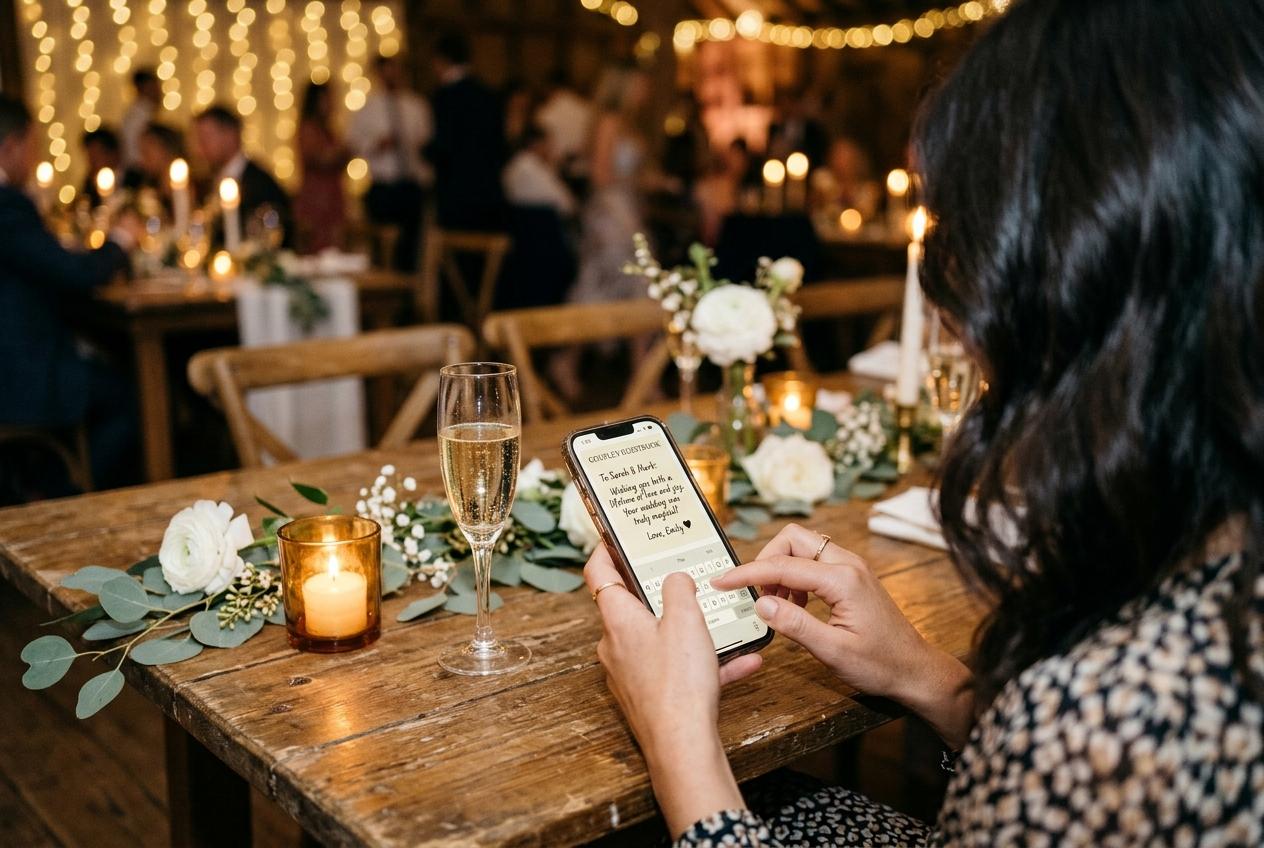
Begin with people who do not know the room
A welcome party brings together people with different amounts of context. Local friends may know the venue and the couple's families, while an overseas cousin has just arrived and recognises nobody beyond the hosts. A partner attending for the first time may not be in the wedding message thread at all. Design the photo invitation for that person, not only for the friends who helped plan the evening. State whose celebration it is, what the collection is for and whether contributions are optional. A familiar-looking QR code alone does not answer any of those questions for a newcomer.
In a hypothetical courtyard welcome party, one family might arrive together while university friends and neighbours drift in later. A sign near a settled seating area can remain available without requiring each arrival to hear the same announcement. Candid Photos gives guests a browser destination through a link or QR code, with no app, account or password needed to upload. That removes an account barrier, but the host still needs to make the invitation socially understandable. The tool cannot tell a tired traveller who everybody is, explain the wedding schedule or replace a thoughtful introduction to the people beside them.
Tell mixed guest groups what they are joining
- Family who already know the plan
- Ask relatives not to assume that their private family thread reaches everyone. Give them the same collection address and a short explanation they can pass on accurately. A family member helping with introductions can mention the link when somebody asks about pictures, without turning it into a task at the door. Avoid language such as you all saw the message, which quietly leaves newcomers wondering what else they have missed.
- Friends arriving from different circles
- Explain that pictures from the welcome party are invited even if a guest does not know the people at the next table. Suggest asking before including somebody in a group photograph and introduce names in person rather than expecting the collection to identify faces. There are no automatic family or friendship folders. Contributions join the event collection according to the scope you have chosen, not a social map of who knows whom.
- Partners and guests outside the main chat
- Make the link available directly at the party so nobody has to join a personal chat merely to contribute. A guest can use the browser route on their own phone and choose which files to send. If somebody wants help, let them retain control of the device. Do not ask a partner to hand over a phone or register on another person's behalf just because they were not part of the original planning group.
Make the request understandable in more than one language
Translate the purpose before the decoration
If your guests read different languages, prepare the important instructions in those languages yourself and have a fluent person check them. Prioritise what the link does, who sees the pictures and the fact that contributing is optional. A beautifully translated heading is not enough if the consent boundary remains unclear. Do not imply that the collection automatically translates your event information or interprets messages for the host.
Keep technical instructions short
Explain the action in ordinary words: open the link, choose the photographs you want to share and complete the upload. Mention that the page works in a browser without an app, account or password. Long directions can feel harder than the action itself, especially after travel. Put the readable address beside the QR code so guests can use whichever route feels familiar without asking someone to translate the whole sign aloud.
Use a helper as a welcome, not a gatekeeper
A willing bilingual guest can answer a question or introduce someone to the collection. They should not become the required route through which every contribution passes, and they do not need host credentials to explain the page. Let people choose their own files and words. A hypothetical guest who prefers a short message in their own language can contribute it without first performing a polished version for the entire room.
Give the QR code a place after the first hello
Do not block the arrival
Keep the welcome itself free for names, coats, refreshments and finding a seat. A code at the entrance can be visible, but do not require scanning as part of arriving. This is not a check-in system, guest register or seating tool. Guests who have travelled or are helping someone with access needs should be able to settle before deciding whether they want to take or share a photograph.
Explain it during a natural pause
Once people are comfortable, make one short invitation. A hypothetical version could say: If you capture a first hello tonight, we would love a few pictures in this collection; please ask everyone in the frame first. Add whether guests can browse or whether you are receiving privately. That gives the code a purpose without asking guests to stop introducing themselves and begin uploading immediately.
Keep the address available after arrivals end
Place a readable sign where guests can approach it without crossing a serving area or leaning over diners. Test it in the evening light and on the actual guest network. If the network needs a browser login, finish that step before testing an upload. Give late arrivals the same opportunity as early ones, then include the link in a later message for anyone who preferred to keep their phone away.
Ask for introductions, not evidence of attendance
Useful prompts help guests notice something without setting a quota. Invite a photograph with someone they have just met, a detail of the gathering or a willing group before the light changes. Keep the phrasing conditional: if you take one you like, here is where it can go. Do not ask guests to photograph every table or prove they spoke to both families. A shy newcomer may be having a good evening while appearing in very few pictures. The collection is a place for memories people choose to share, not a measure of how successfully they joined the group.
In a hypothetical welcome supper, the hosts might invite a brief written note about how someone first met either partner. That can create a warm record without requiring a camera, provided the guestbook is available and enabled. Suggest keeping stories suitable for the intended audience; meeting new relatives is not the moment to publish a private anecdote about somebody else's past. If you offer video messages, make them optional and suggest a quiet corner away from conversations. Do not interrupt an introduction to get a second take, or encourage a guest to record a person whose name they have only just learned.
Keep tomorrow's guests in mind tonight
A shared wedding destination
- You can invite welcome-party contributions into the combined wedding event collection when the scope and audience fit. Use the same link consistently and tell guests that photographs from other wedding gatherings may also appear. There is no automatic welcome-party folder keeping tonight's material separate from tomorrow's ceremony.
- Remember guests who attend only one gathering. Someone invited to the wedding but not the welcome supper may still receive the collection link, so do not describe the audience as only the people currently in the room. Set the viewing arrangement according to the actual invitation circle.
A deliberately separate welcome event
- A distinct collection can make sense if the welcome party needs a different audience or purpose. Create a separate event and choose its own plan; one wedding purchase does not include a second paid event collection. Send the right address with clear wording so guests do not have to guess which nearly identical link to use.
- The host can switch off the public gallery for an upload-only guest page, or turn on approval to hold submissions until accepted. Explain your choice and handle requests privately. Neither option prevents a guest from forwarding an address or sharing a photograph already stored on their phone.
Choose capacity for a first evening, not an imagined crowd
If welcome-party pictures join an existing event, they use that collection's limits rather than a separate allocation for the first evening. For a standalone welcome event, Gather is $19 USD once per event for 200 photos, 30 videos, 5 GB and one month online, with a written guestbook and standard downloads. It can add a video guestbook or slideshow for $9 USD each. Think about what guests are likely to send: a relaxed supper may produce selected photographs, while a lively evening with several speeches could involve more video storage. Neither the headcount nor the party's name determines the right choice by itself.
Celebrate is $39 USD once per event for 750 photos, 100 videos, 20 GB and three months, including original-quality downloads, slideshow and video guestbook. Keepsake costs $69 USD once per event for 2,000 photos, 300 videos, 50 GB, six months and two extra managers, with those included features. Preview costs $0 for 20 photos, no videos, 10 contributors, 500 MB and seven days without downloads; a written guestbook or slideshow is a separate $9 addition. All are event prices in USD, not recurring subscriptions. Choose a display only if it will help the room, not because people meeting for the first time need something else competing for their attention.
Let the welcome continue after the last arrival
As people find their circle
Offer help without supervising
If a guest asks, show them the link and explain the audience. If the connection fails, let them keep the files and return later from a suitable network. There is no offline uploading, so check completion rather than assuming a scan sent the pictures. Avoid making the helpful person spend the whole evening by the sign while everyone else gets to meet each other.
Before the next celebration
Keep reminders in proportion
If the wedding follows immediately, do not crowd practical ceremony information with repeated upload requests. A brief thank-you and the same link may be enough. In a hypothetical weekend with a welcome supper on Friday, the hosts could wait until after Saturday's celebrations for one final invitation. Verify the event's dates before choosing that timing rather than assuming every related gathering extends retention.
After the wedding rush
Save the beginning as well as the finale
Review the early photographs alongside later arrivals, respond to any privacy requests and download before the collection closes. Check the archive opens and keep another copy you control. If you want a separate first-hellos folder in your own archive, organise it yourself after downloading. Thank the people who helped welcome others, whether or not they happened to contribute a photograph to the collection.
Questions from guests who have only just arrived
Must a guest join our wedding chat to upload?
No. Share the browser link directly or provide its matching QR code at the gathering. Guests do not need an app, account or password, so people outside the planning thread can contribute without joining another conversation.
Can we prepare instructions in two languages?
Yes, you can write and print your own bilingual instructions or send translated messages. Arrange and check those translations yourself; do not promise automatic language conversion, and make sure the purpose, audience and optional nature of sharing are clear in both versions.
Will welcome pictures have their own section in the wedding gallery?
Not automatically. Contributions sent to the wedding event join one combined collection. If you need a distinct collection rather than your own organisation after downloading, create a separate event with its own plan and address.
Should we ask every guest for a picture with someone new?
Treat that as an optional idea, not a condition of participating. Some guests prefer conversation or written wishes, and others may choose not to contribute at all. Ask permission before taking photographs and avoid turning introductions into a checklist.
Give the first hellos somewhere to stay
Prepare one clear invitation that makes sense to someone arriving without context. Explain the audience, offer the browser link and let guests decide what to share. Then return to welcoming people: the collection should hold the evening's beginnings, not get in the way of them.
Wedding photo sharing
Put one link on the tables and let everyone contribute.
Create a collection, print the table stands, and the photographs your guests took are waiting for you the morning after. Guests never install anything and never make an account.