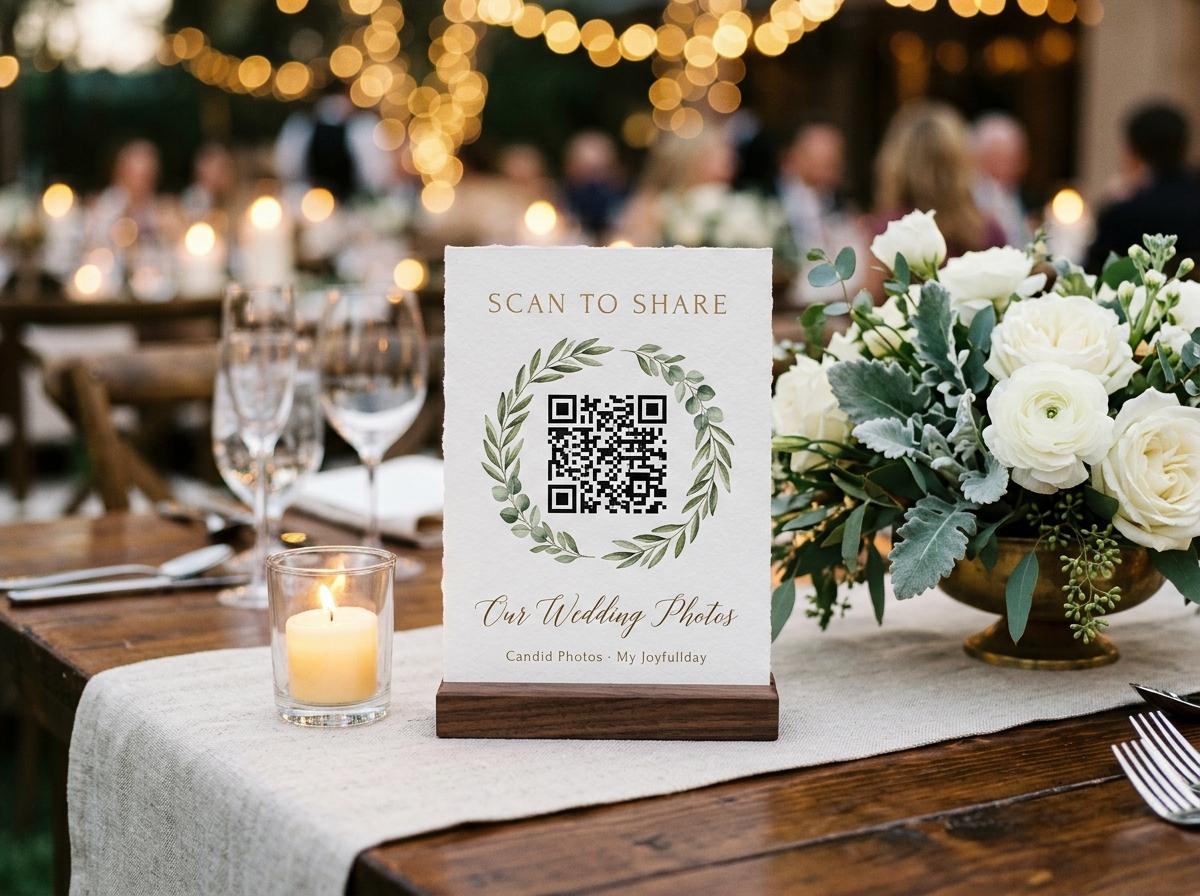
Collaboration
A collaborative photo album that nobody has to curate
Everyone adds to the same album, and no one is in charge of deciding what stays. That is what collaborative means at a party, and it is a different problem from an album with an editor behind it.
Every photo service calls itself collaborative, and the word quietly covers two different arrangements. In the first, a group contributes and one person decides what survives: the album is a workshop with a foreman, and the foreman does the thinking. In the second, which is what actually happens at a party, contributions pile up and nobody curates the result, because the nearest thing to an editor is whoever opened the collection, and they were at the event too.
Two things people mean by collaborative
- Collaborative as shared editing
- Several people arrange one thing: choosing the order, writing the captions, settling the cover, agreeing which frames to drop. It needs accounts, permissions and people willing to spend an evening on it. Almost nobody does this after an event, and no wedding album is going to get five guests to agree on a page.
- Collaborative as shared contributing
- Several people put things into one place and nothing is arranged. The only act of authorship is deciding to send. This is the version that works, because the ask is small, it happens while the photographs are still at the top of a camera roll, and it can be done standing at a table with a drink in the other hand.
- The one person who still exists
- Somebody opened the collection, named the occasion and paid the plan. Call them a host or call them a bookkeeper. They are not the editor of the album; they are the reason it has an address, an allowance and a closing date, and they are the one person who has to remember to download it.
- What an editor is normally there for
- Deduplication, tidiness, taste, and the reassuring sense that somebody looked at all of it. Remove the editor and you need substitutes for all four. Attribution is the one that does most of the work, because it turns a pile of files back into a list of people you can ask.
- What an album without one needs instead
- Names against submissions, so a pile has people in it rather than files; a shape guests can browse or ignore; an allowance that does not run out before the cake; and a stated end, so that choosing happens once at the download rather than never at all. Those four are the whole replacement for a curator, and three are settings.
- Moderation, which is not the same thing
- Approval holds a submission until the host accepts it. It keeps the room screen decent and keeps out the blur of somebody's shoe. It is not curation: the purpose is not to make an exhibition out of the evening, and a host who treats it as one ends up rejecting the photographs they will be glad about in five years.
What an editor is supposed to prevent
Duplication
Six guests photograph the same toast, and a curator would keep two. Keep all six. Somebody shot it from the aisle, somebody from three rows back, somebody with their arm in it, and one of them caught the best man's face while the other five caught the couple. The frame you want is usually the one nobody else was standing in a position to take.
Bad exposure and stray blur
This is the category moderation genuinely improves, and it improves it cheaply: a floor, an elbow, the back of a head, a photograph taken through a wine glass. Turn approval on and those never enter the archive at all, because rejected submissions are excluded from the download rather than hiding inside it.
One guest's forty frames on top of everyone's
The relative who shot the food from every angle is the same relative who will shoot your next occasion, and somewhere in that set is the only photograph of your aunt laughing at something nobody else heard. There is no rule that an album must be even. If the allowance holds, let it be uneven and be grateful.
Nobody being able to find anything afterwards
An album with names attached is searchable in a way a chat never becomes. You will not locate the photograph of the garden by scrolling nine hundred files; you will locate it by remembering that Ida was the one who wandered round the back, and asking her. The name field is the index, and it is the only one you get.
The album being abandoned half-full
Curators do not prevent that; deadlines do. An album that ends gets downloaded, because there is a date to act against and warning mail attached to it. An album that goes on forever sits exactly where it was left in the third week after the party, unvisited, unopened and undownloaded, which is the failure nobody notices.
Guests wondering whether to bother
A contributor who arrives at an empty page and sees nothing happening concludes the thing is broken, or dead, or both. A contributor who arrives and sees thirty photographs from the last hour sends two more and mentions it to the table. Browsing is not a nicety; it is the reason the second fifty files arrive at all.

Order in an album nobody curated
The first half hour, from the people who were already shooting
Four or five contributors, mostly the ones who photograph everything at every occasion, plus a relative who found the card on the table out of plain curiosity. This is when the album either looks alive or does not, which is why having something in it before the room arrives — your own photograph of the table, the venue, the cake — changes how the fifth guest feels about the page.
The meal, from the tables
Seated, phones out, nothing else to do for twenty minutes. Contributors here send two or three files each rather than twenty, and what they send is whatever they took in the last ten minutes, which is exactly the material no other method recovers: too recent to have been forgotten, too ordinary to have been sent to anybody.
The middle of the evening, in bursts
One guest tells the person beside them that their photographs are on the screen, and three submissions arrive at once. Then nothing for forty minutes while the speeches happen and everybody is watching. Both halves are normal. An uncurated album does not fill at a steady rate, and a host who expects a straight line worries for no reason.
The tail, from the people who went home
Late contributions are the send-off, the taxi, the last dance, the photograph of the room with the lights down and the chairs stacked. This is the stretch that rewards an album which stays open for days after the event rather than shutting at midnight, and it is the stretch no request in a chat ever reaches, because the chat has moved on.
The download, where the editing finally happens
One streamed archive, every file that was kept, numbered in the order it arrived. Choosing comes at this stage, by the people who own the photographs, over a laptop and a coffee, weeks later if they like, with hindsight and no time pressure. An album that was not curated on arrival can still be curated on the way out, and it is curated far better, because it is curated by somebody who was there.
Nobody is in charge, but somebody still exists
Removing the editor does not remove the owner, and the difference is worth keeping straight in your head before the link goes out. One person holds the account, chooses the plan, sets the date and takes the archive. The rest of the group has no permissions to manage and nothing to log into. Every decision that looks like curatorship — what is shown, whether contributions wait for approval, whether the guestbook is open — was taken once, on that one account, before the album started filling.
One collection is one occasion
A collection holds a single event: one name, one allowance, one closing date. For most groups that is the right shape rather than a limitation, because everything from one wedding, one trip or one birthday lands in one address and comes down in one archive. A second occasion gets its own collection.
Compare the allowancesWhere the collaboration breaks down
What goes wrong with no editor
- The allowance runs out mid-evening and the last guests find a page that will not take their files.
- Contributions arrive into an album nobody can browse, so nobody knows which moments are already covered.
- One contributor's forty frames sit on top of everyone else's and the grid looks like one person's work.
- The album closes without a download, because the person who opened it assumed somebody else had taken it.
- The room screen plays whatever arrived, including the blur of a shoe and a photograph of a ceiling.
What the structure does instead
- Plan for head count before the link goes out, with an unlimited number of contributors above the free tier.
- Leave the gallery on, so a guest can see the pile standing and add the angle that is missing from it.
- Draw the preview on each contributor's own phone and store the file as it arrived, spreading the weight.
- State how long the collection stays online and warn before it comes down, so one download is agreed rather than assumed.
- Hold submissions behind approval when there is a projector in the room; only accepted photographs play.
None of these fixes needs a committee or an evening of arranging. They are a setting, an allowance and a date, decided once by whoever opened the album.
What an uncurated album needs instead of taste
- An allowance that survives the evening: 200 photographs and 30 clips on Gather, 750 and 100 on Celebrate, 2,000 and 300 on Keepsake, with extra uploads as an add-on.
- A welcome line in your own voice, because a guest reads it once and decides whether to bother, and a page that looks like a service gets nothing.
- A decision about browsing, since a visible pile invites more contributions and an upload-only page suits a surprise rather than a reunion.
- A named downloader, because the archive is the only copy that exists after the closing date, and a group of twelve people assuming somebody else took it is how sets are lost.
Who can add, who can remove, and who can hand it over
Collaborative is not a permission system with five roles. There are two, and the difference between them settles most arguments before they start.
- Anyone holding the address
- Every guest who opens the link is a contributor: they can send a photograph, a clip, or both in one submission, and a note with their name on it. They cannot delete anything, change a setting, or see the guest list. That is the whole of what a guest can do, and it is deliberately small.
- Whoever opened the collection
- The owner holds the settings, the review step if it is switched on, the download and the closing date. Uploading your own camera roll is done from the same place a guest uploads, so the photographer's files and your pictures land in the merged set rather than in a separate folder you have to reconcile later.
- Two extra pairs of hands
- Keepsake adds two more people to the account around a collection, which is what a wedding with a planner and two families actually needs: somebody else can watch the pile on the night without handing over the password to the whole event.
Straight answers about collaborative albums
Can guests add to the album without seeing the rest of it?
Yes. Switch the public gallery off and the guest page takes uploads without showing what anybody else sent. Contributors still get their files into the album; they simply cannot browse it, which is the setting for a surprise and for a room you would rather not have comparing photographs.
How many people can contribute to one album?
Ten on the free tier, and an unlimited number of contributors on Gather, Celebrate and Keepsake. The figure that keeps changing after that is how many photographs and clips the album will hold, which is 200, 750 or 2,000 depending on the plan.
Is there somebody who approves what goes in?
Only if you switch approval on. Then a submission waits until the host accepts it, and anything rejected is left out of the archive. With approval off, contributions go straight into the collection and onto the room slideshow.
Do the photographs get squeezed on the way in?
The file a contributor chose is stored as it arrived. A small preview is made in their browser for the grid, which is what keeps a nine-hundred-file album loading on a phone. The archive gives you the originals: full quality on Celebrate and Keepsake, standard downloads on Gather, none on the free tier.
What happens to the album when the period ends?
It comes down on the date the plan states, counted from the event date, after warning mail goes out. From then on, the archive somebody downloaded is the copy that exists, which is why a collaborative album wants one agreed download rather than five assumed ones.
Can messages go in the same album?
Written guestbook entries belong to the same address on Gather and above, and recorded video messages come with Celebrate and Keepsake, or as an add-on to Gather. Entries can be moderated and featured, so the wishes sit beside the photographs instead of in a separate service nobody opens twice.
Should one person be responsible for choosing the good ones?
Not during the event. Work the rejects through quickly if moderation is on, and leave the selection until after the download, when the whole album can be seen at once and nobody is under time pressure to decide what a stranger's photograph of the cake is worth.
Open an album that does not need a curator
Name the occasion, decide the allowance, print the card, and let everybody add their own. The choosing can wait until the archive is on your own machine, with a coffee and no deadline.
Event photo sharing
Put one link on the tables and let everyone contribute.
Create a collection, print the table stands, and the photographs your guests took are waiting for you the morning after. Guests never install anything and never make an account.